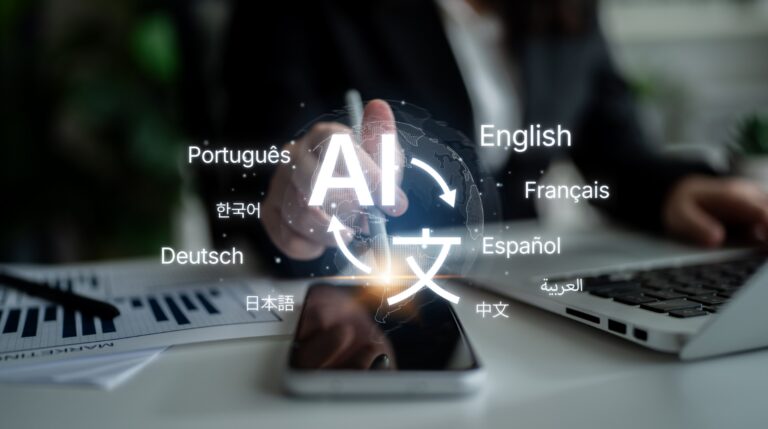

HR translation services play a critical role in ensuring clear communication, compliance, and employee trust across multilingual workforces. When HR teams communicate across languages, the stakes are high. From onboarding documents and workplace policies to benefits information and compliance training, even small translation errors can create confusion, legal risk, and employee distrust. That’s why, if you’re unsure when AI translation is appropriate, using a framework like our AI Translation Risk Assessment can help you better evaluate risk and make more informed decisions.
As businesses expand globally and multilingual workforces become the norm, HR translation services are under increasing pressure to deliver clear, culturally accurate communication at scale. While AI translation tools can help speed up workflows, relying on them without evaluating risk can lead to costly misunderstandings. Here are the top five reasons accurate translation is critical in HR.
1. Compliance and Legal Protection
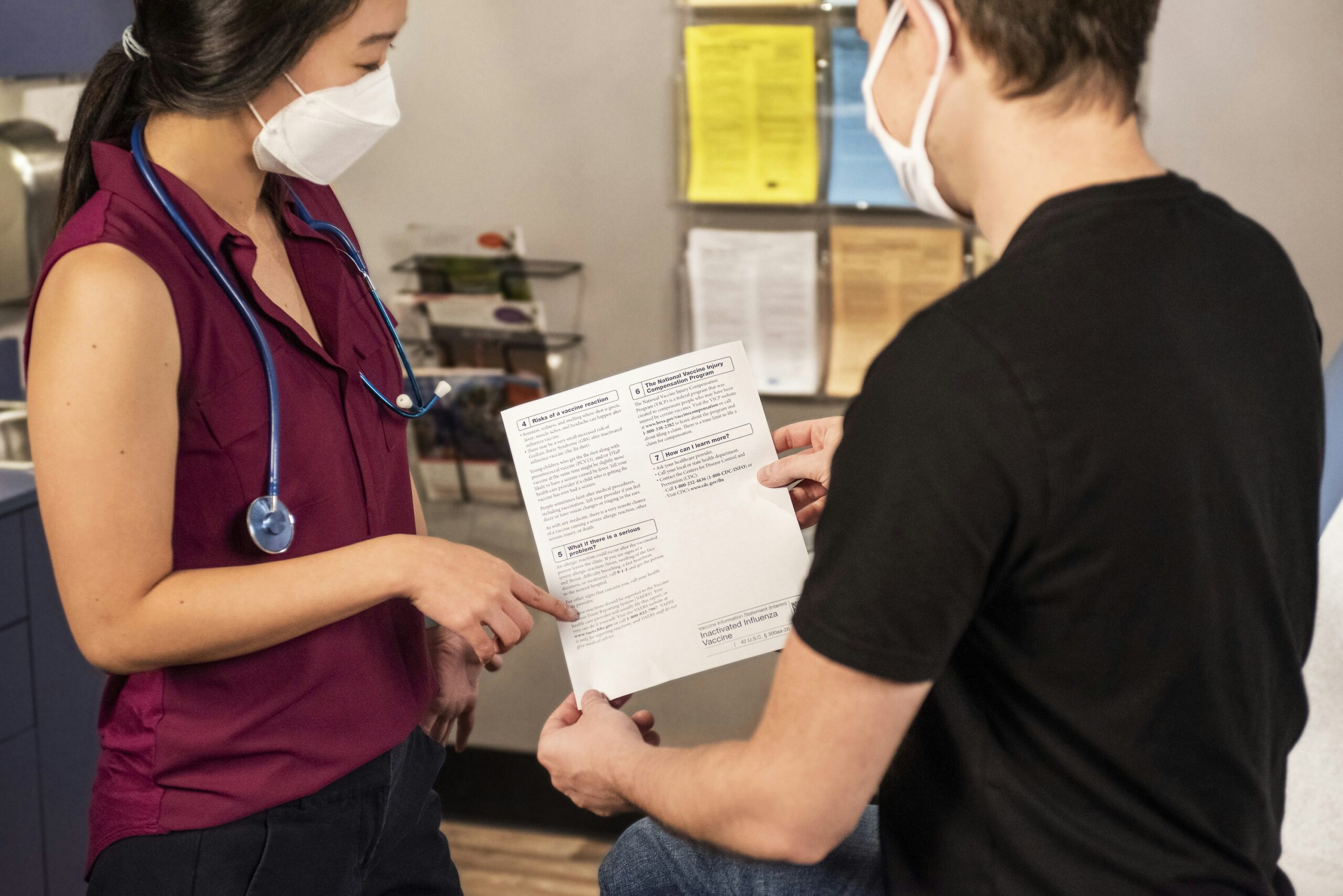
HR documentation often includes legally sensitive content such as employee handbooks, contracts, anti-harassment policies, safety procedures, and benefits enrollment forms. A mistranslation in any of these materials can expose organizations to compliance violations, disputes, or liability.
AI translation tools may produce fluent-sounding content while still misrepresenting meaning, a risk that monolingual reviewers often cannot detect. Recent research by Tranquality (LTAC Global) on translation quality and AI safety highlights that translation errors are uniquely dangerous because they can appear accurate even when critical meaning is lost.
For HR teams, that means accuracy is not just a language issue, it’s a risk management issue.
2. Employee Trust and Inclusion
Employees need to feel confident that workplace communications are understandable, respectful, and accurate in their preferred language. Poor translations can make employees feel excluded, confused, or undervalued.
This becomes especially important for:
- Diversity, equity, and inclusion initiatives
- Employee wellness resources
- Performance reviews
- Internal announcements
- Crisis communications
Literal or context-blind translations often fail to capture tone, intent, or cultural nuance. Human-reviewed translation helps ensure messaging resonates appropriately across cultures and supports a more inclusive workplace experience.
3. Accurate Safety and Training Communication
Safety training and operational procedures require precision. If multilingual employees misunderstand instructions because of inaccurate translations, organizations face increased operational and safety risks.
Research consistently shows that machine translation performs best with straightforward, repetitive technical content but struggles when context, ambiguity, or specialized terminology is involved.
For HR translation services and training departments, this means critical materials should undergo risk evaluation before AI-generated translations are distributed to employees.
4. Protecting Employer Brand and Company Culture
Every HR communication reflects your company culture. Errors in translated job postings, onboarding materials, or leadership communications can damage credibility and create inconsistent employee experiences across regions.
Employees notice when translations feel unnatural or inaccurate. Over time, these communication gaps can weaken trust in leadership and impact retention. Human linguistic review helps preserve brand voice, professionalism, and cultural alignment in every language.
Organizations that apply a risk-based translation strategy are better equipped to balance speed, scalability, and quality while protecting their reputation.
5. AI Translation Isn’t One-Size-Fits-All
AI translation can be effective for low-risk content, but HR communication often falls into medium- or high-risk categories where accuracy matters significantly more than speed.
The challenge is knowing where the line is.
That’s where a structured AI Translation Risk Assessment becomes valuable. Rather than treating all content the same, organizations can evaluate:
- Content sensitivity
- Audience impact
- Compliance requirements
- Cultural nuance
- Consequences of mistranslation
This approach allows HR teams to use AI strategically while ensuring high-risk communications receive the human oversight they require.
Why Human-in-the-Loop Translation Is Essential for HR
A human-in-the-loop approach strengthens HR translation services by combining AI efficiency with expert oversight. While AI translation can improve speed and scalability, it lacks the contextual understanding and judgment required for high-stakes HR communication. That’s where a human-in-the-loop (HITL) approach becomes essential.
Human linguists don’t just translate words, they interpret meaning, tone, intent, and cultural nuance. In HR contexts, this includes:
- Ensuring legal and policy language is accurately conveyed
- Adapting messaging to reflect cultural expectations and sensitivities
- Catching subtle errors or ambiguities that AI may overlook
- Preserving company voice and clarity across all languages
Without human oversight, AI-generated translations can introduce risks that are difficult to detect, especially for monolingual reviewers. This is particularly dangerous in HR, where miscommunication can directly impact compliance, safety, and employee trust.
A human-in-the-loop model allows organizations to combine the efficiency of AI with the accuracy and accountability of professional linguists. Instead of replacing human expertise, AI becomes a tool within a controlled, risk-aware workflow.
Why HR Translation Services Matter for Compliance and Communication
As AI translation adoption grows, HR leaders need a clear framework for determining when automation is safe, and when it introduces unnecessary risk. The Language Group’s AI Translation Risk Assessment helps organizations make informed decisions by evaluating content complexity, audience needs, and business impact before translation workflows are deployed.
Evaluating your approach to HR translation services is essential to reducing risk, if your organization is using or considering AI translation for HR communication, now is the time to assess the risks before small translation errors become major business problems.